NuShake came out to our house and removed the old roof, installed the new roof with all the trim and the aluminum around the vents, and it looks brand new. They did it all in one day and did an excellent job. I highly recommend them.
Free roof estimates • Brian Espindola, Owner • CSLB #1142280 • 4.5 stars, 107 Google reviews
Shake roofing —
Shake roofing —
repair, replace, or convert to Class A.
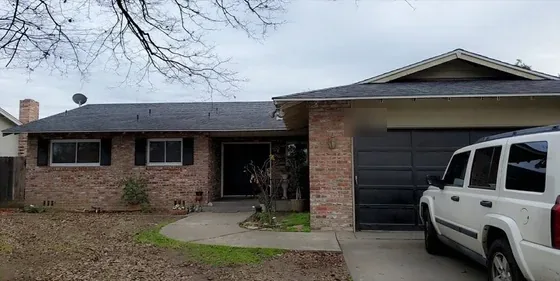
NuShake has been roofing California homes since 1976, and the name comes from shake. Across the Central Valley & East Bay, we repair cedar shake roofs that can be saved. The ones that can't, we convert to Class-A materials (the highest fire rating) that keep the hand-split look: composite shake, presidential-style architectural shingle, or metal shake profiles. Every roof is priced after a free on-site estimate and given as a written quote; your cost depends on size, pitch, material, and access.
It's In Our Name
Class A Fire-Rated Options
GAF Master Elite
CSLB #1142280
Free estimates
Mon–Fri 8am–5pm · Sat 8am–12pm
Get a free shake roof estimate.
Takes 30 seconds. No obligation.
- Licensed — CSLB #1142280
- 5 manufacturer certifications — GAF, Owens Corning, CertainTeed
- Written quote — before any work
- No high-pressure sales — ever
What customers say
4.5 stars across 107 Google reviews.
NuShake did a beautiful job of installing my new roof. The amazing crew seemed to work non-stop and the roof turned out beautifully. My property was completely cleaned of any debris and I commend them all for doing a fantastic job.
The process from start to finish was excellent. Lindsey (office manager) and Sergio (estimator) respond quickly and efficiently to calls, emails, and texts. Edgar, Carlos, and Jose were very communicative when I had questions during the removal, dry rot repair, and installation of new roof.
Our namesake service
Shake is in our name — and we've been roofing since 1976.
Doug Heath started this company in 1976. Back then, hand-split cedar shake was the signature roof of California's new neighborhoods. The business grew with that material, and the NuShake name comes straight from it.
Brian Espindola took over NuShake in 2025 under his own C-39 license (CSLB #1142280). The name stayed. So did the specialty. Five decades after the first shake roofs went on, we now spend as much time converting them as installing them.
That history matters for a practical reason. Shake roofs age differently than shingle or tile. A 30-year-old shake field has its own ways of failing. It splits, it slips, and the flashing (the metal that seals roof edges and joints) often gives out first. Knowing those patterns is what separates a real repair from a patch that leaks again next winter.
Whether your shake roof needs a repair, a full replacement, or a conversion to a fire-rated material, this is the work we were named for.
Cedar shake repair
Wood shake repair and maintenance
A shake roof with life left in it deserves a proper repair, not a sales pitch for a new roof. Here is what shake repair work usually involves.
Individual shake replacement
Cracked, split, cupped, or wind-lifted shakes can be pulled and replaced one at a time. The skill is in matching thickness and weave so the new shakes shed water with the old ones. It also means working without cracking the neighboring shakes.
Flashing, ridge, and valley work
On most older shake roofs, the metal fails before the wood does. Valleys, chimney flashing, and pipe boots (the seals around vent pipes) are the usual leak sources. These are fixable without replacing the roof.
Debris and moss removal
Shake breathes through its keyways (the gaps between shakes). When leaves and moss pack those gaps, the wood stays wet and rots faster. Careful cleaning extends the roof's life. Pressure washing destroys it; we never do that.
An honest verdict
Repair money is well spent on a roof with years left. It is wasted on a roof at end of life. We tell you which one you have at the free estimate, in writing. For a photo-documented report — $349 in the Central Valley, $525 in the Bay Area — we can add that on request.
The honest line
When shake can be saved — and when it can't
Usually worth saving
- Damage is limited to one slope or one area
- Shakes are still thick and lying flat
- Leaks trace to flashing or valleys, not the wood field
- The roof is under roughly 25 years old
- Your insurer is not raising the roof as an issue
Usually time to replace or convert
- Splitting, cupping, or rot across multiple slopes
- Shakes worn thin — you can see daylight in the attic
- Repeated leaks in different spots, season after season
- An insurance non-renewal notice names the wood roof
- The roof is 30 or more years old
One more factor: California fire rules. If your home sits in a high fire-hazard zone, a like-for-like wood shake re-roof is usually no longer an option. That is where conversion comes in.
Shake-to-Class-A conversion
Keep the shake look.
Keep the shake look.
Lose the fire risk.
A conversion replaces wood shake with a Class-A material, the highest fire rating a roof can earn. The good news: you do not have to give up the look. Three material families do it well, and NuShake installs all three.
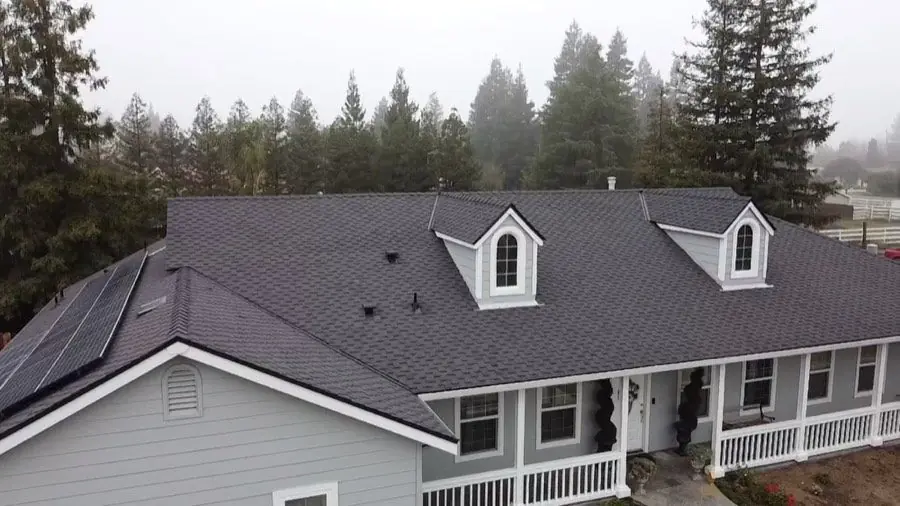
Composite shake
Polymer shakes molded from real hand-split cedar. Brands like DaVinci and Brava are the closest match to true shake, with deep grain, staggered edges, and varied widths. Class-A assemblies available.
- Closest look to real cedar
- Roughly 50-year product warranties
- Light enough for most framing
- Premium price — the costliest option
Presidential-style architectural shingle
Sculpted, multi-layer asphalt shingles give a shake profile at the lowest cost. CertainTeed Presidential Shake is the best-known. As a CertainTeed Select ShingleMaster and GAF Master Elite contractor, NuShake can offer extended warranties like SureStart Plus and GAF Golden Pledge on qualifying systems.
- Most popular conversion path
- Lowest cost of the three
- Class-A fire rating standard
- Extended manufacturer warranties available
Metal shake profiles
Stamped steel or aluminum panels with a shake texture. Lightest weight, longest service life, and Class A as part of the assembly. A good fit if you want one roof for the rest of the home's life. See our metal roofing page for details.
- Longest service life of the three
- Lightest material on the framing
- Sheds embers, snow, and debris
- Mid-to-high price range
East Bay readers, here is the local picture. The Danville and Blackhawk-style neighborhoods built in the '70s through '90s hold some of the region's largest remaining wood-shake stock. Many HOAs there have already approved these shake-look materials. Our Danville page covers that picture in full, and our conversion cost guide breaks down the numbers.
Fire-hazard zones
WUI zones and the
WUI zones and the
Class-A requirement
What the rules say
Much of our service area sits in or near the WUI (Wildland-Urban Interface, where homes meet wild land). California maps these areas into fire-hazard severity zones. In designated high-hazard zones, re-roofs generally must meet Class-A assembly standards.
Untreated wood shake cannot meet that standard. Fire-retardant-treated shake exists, but it costs more, weathers unevenly, and many insurers decline it anyway. For most homeowners in a mapped zone, conversion is the practical path.
Where this hits locally
The East Bay side of our territory includes mapped fire-hazard zones with active enforcement. Danville and the Diablo foothills are the clearest examples. Valley towns see fewer mapped zones, but insurers apply their own wood-roof rules everywhere, map or no map.
Your city or county building department can confirm your zone. We check it as part of every shake inspection. For the full background, read our WUI fire roofing guide and our Class-A foothills guide.
The insurance problem
Wood shake and the
Wood shake and the
non-renewal letter
Why carriers are walking away
Across California, many insurance carriers now decline or non-renew homes with wood shake roofs. After years of wildfire losses, the wood roof is one of the first things underwriters flag. It does not matter how well the roof is maintained. The material itself is the objection.
If you have received a non-renewal letter that names your roof, you are not alone, and the problem is solvable.
How a conversion fixes it
A documented Class-A re-roof removes the wood-roof objection for most carriers. The materials on this page (composite shake, architectural shingle, metal) all qualify in Class-A assemblies. The shake-look options keep HOAs satisfied at the same time.
Our advice: ask your agent to confirm in writing that a Class-A roof resolves the issue before you start. We supply the material specs and fire-rating documentation carriers ask for. Full details in our shake insurance non-renewal guide.
Pricing
What shake work costs
Every roof is priced after a free on-site estimate and given as a written quote; your cost depends on size, pitch, material, and access. Repairs are the small end: individual shake replacement and flashing work are priced by scope after inspection. Full conversions follow our roof replacement scope and usually land toward the upper end, because shake work adds tear-off and re-decking.
Why the upper half? Two reasons. Shake tear-off is heavier work than shingle tear-off. And most shake sits on spaced boards rather than solid plywood, so conversions typically include re-decking (adding solid sheathing over the old boards) before the new roof goes on.
Material choice moves the number most. Presidential-style architectural shingle is the budget anchor. Composite shake and metal shake profiles run meaningfully above it. Every NuShake quote is written and itemized. Tear-off, re-decking, underlayment, and material are separate line items, so you can see exactly what each choice costs.
How it works
Our shake roofing process
| Free estimate and save-or-replace verdict. We walk the roof, check the field, flashing, and attic, and confirm your fire-hazard zone. You get a written verdict: repair, replace in kind where allowed, or convert. Each path that makes sense comes with its own quote. |
| Material selection and approvals. We bring samples of composite shake, presidential-style shingle, and metal profiles. If you have an HOA, we help with the approval paperwork. NuShake pulls all permits for your jurisdiction. |
| Tear-off and re-decking. Old shake comes off and is hauled away. Where the roof sits on spaced boards, we install solid sheathing over them. Any rot found underneath is photographed, shown to you, and replaced. |
| Underlayment and flashing. The underlayment (the waterproof layer under the roof surface) goes down next, with new flashing at every edge, valley, and penetration. On fire-zone jobs this layer is part of the rated Class-A assembly. |
| Installation and close-out. The new roof goes on, the site is cleaned, and we run a magnet sweep for nails. We schedule the final city or county inspection and hand you warranty and fire-rating documentation for your records, and your insurer. |
Most single-family conversions take about a week of on-site work once material arrives. Larger or steeper roofs take longer. Your written quote includes the schedule.
Why NuShake
Why homeowners pick NuShake for shake work
It's the namesake service
This company has been roofing since 1976, and shake gave it its name. We know how the material ages, how it fails, and how to replace it without losing the character it gave the house in the first place.
Manufacturer-certified across GAF, CertainTeed, Owens Corning
GAF Master Elite, GAF Solar Certified, GAF Gold Elite, CertainTeed Select ShingleMaster, and Owens Corning Preferred. On qualifying conversion systems, that unlocks extended warranties such as GAF Golden Pledge and CertainTeed SureStart Plus.
Owner-operated, one license
Brian Espindola runs NuShake under his own C-39 license (CSLB #1142280). The person whose name is on the license is the person responsible for your roof.
Shake roofing FAQs
Common shake roofing questions
If damage is limited to one area and the shakes are still thick and lying flat, repair is usually worth it. Widespread splitting, cupping, or rot means the roof is at the end of its life. We give you a straight save-or-replace verdict at the free estimate — in writing.
Class A is the highest fire rating a roof can earn. It measures how well the roof resists flame spread and burning embers. Composite shake, architectural shingle, metal, and tile can all reach Class A. Untreated wood shake cannot.
Three main options. Composite shake — brands like DaVinci and Brava — looks closest to real cedar. Presidential-style architectural shingles give a sculpted shake profile at the lowest cost. Metal shake panels add the longest service life. All three are available in Class A assemblies.
Often, yes. Many California carriers now decline or non-renew homes with wood shake roofs. A documented Class-A re-roof removes that objection for most carriers. Ask your agent to confirm in writing before you start. We provide the material and fire-rating documentation they ask for.
Every roof is priced after a free on-site estimate and given as a written quote; your cost depends on size, pitch, material, and access. Shake conversions usually land toward the upper end of a replacement, because shake tear-off and re-decking add work, and composite shake and metal shake cost more than architectural shingle. Every quote is written and itemized.
It depends on your fire zone. In designated high fire-hazard areas, re-roofs generally must meet Class-A assembly standards, which untreated shake cannot. Fire-retardant-treated shake exists, but many insurers still decline it. Your local building department can confirm your zone — we check it as part of the free estimate.
Related shake, fire,
and insurance guides
Shake decisions usually involve three questions at once: the roof, the fire zone, and the insurance carrier. These NuShake guides cover all three in depth.
Ready to start?
Get a free shake roof estimate.
NuShake serves the Central Valley & East Bay. We assess your shake field, flashing, deck, and fire zone. Then you get a written save-or-convert verdict, with no pressure.
CSLB #1142280 • Mon–Fri 8am–5pm · Sat 8am–12pm • office@nushake.com